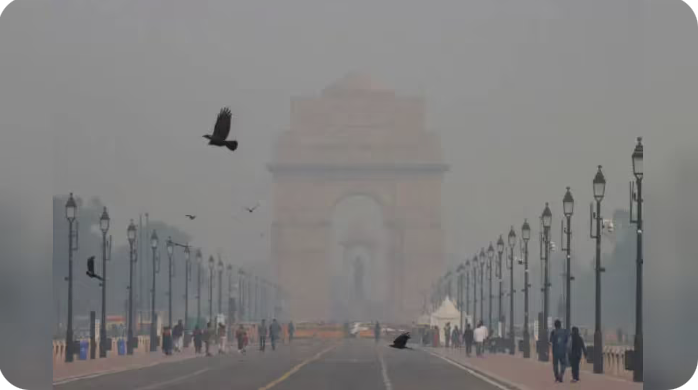
Study of seasonal pollutant trends key to tackling air pollution: Data
The study shows that air pollution in India changes with the seasons, and each pollutant behaves differently. Tiny particles like PM2.5 and PM10 are highest in winter, while gases like ozone and nitrogen dioxide tend to rise in summer.
It also explains that these changes are often due to weather conditions (like wind and rain), not just reduced emissions.
The main point is that by studying each pollutant separately and understanding its seasonal pattern, authorities can identify sources better and take more targeted action to reduce air pollution.
Click on the link to read this copy: Study of seasonal pollutant trends key to tackling air pollution: Data