Monitoring stations placed in cleaner zones, northwesterly winds help disperse pollutants
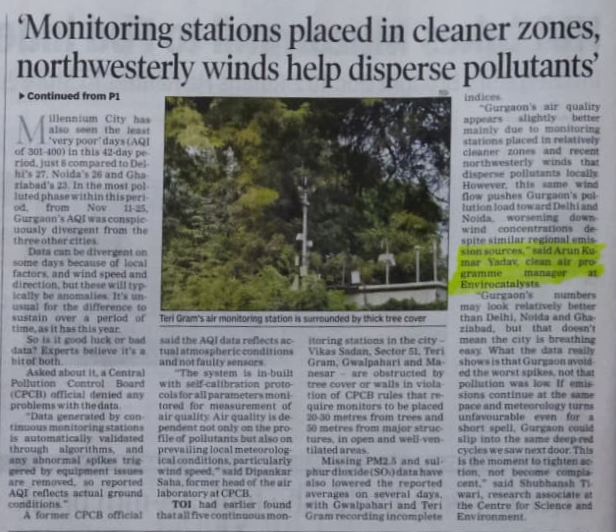
The article explains why Gurugram’s air quality data looks better compared to Delhi and Noida. The improvement is largely due to air-monitoring stations being placed in cleaner zones with more tree cover, which naturally disperses pollutants. Experts state that north-westerly winds have helped blow pollution away from these locations.
Environmental groups argue that the readings may not present the full picture of actual public exposure because they do not capture pollution levels in densely populated or traffic-heavy parts of the city. As a result, the recorded AQI may appear better than the real situation on the ground.
Read the complete news coverage from the attached newspaper clipping