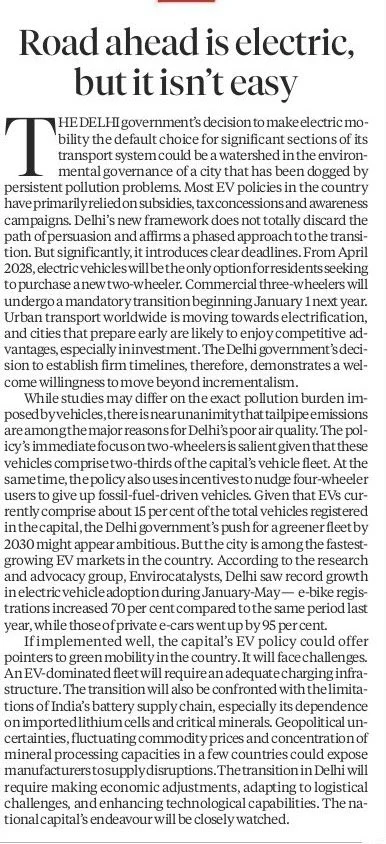
Road ahead is electric, but it isn’t easy
Delhi is taking a bold new approach to tackle its persistent air pollution problem by making electric vehicles (EVs) mandatory for certain groups, moving away from just offering optional incentives.
Key Points:
Strict Deadlines: Unlike previous policies that relied on gentle persuasion and subsidies, Delhi is setting firm dates. From January 2027, commercial three-wheelers must go electric, and by April 2028, anyone buying a new two-wheeler will only be allowed to buy an electric one.
Targeting the Biggest Culprits: Because motorbikes and scooters make up two-thirds of Delhi's vehicles, the policy heavily targets two-wheelers to cut down tailpipe emissions.
Rapid Growth: Although EVs currently make up about 15% of the city's vehicles, adoption is skyrocketing—private electric car registrations nearly doubled in early 2026 compared to the previous year.
Upcoming Hurdles: While it is a progressive step, the city faces big challenges. It desperately needs to build a proper charging network and navigate India's reliance on imported lithium and battery materials, which are vulnerable to global supply chain disruptions.
Click on the link to read this copy: Road ahead is electric, but it isn’t easy