
Envirocatalysts Blog
Tags
- AAP
- AQI Dashboard
- AQI Forecasts
- AQI Monitoring Stations
- Air Monitoring Stations
- Air Pollution
- Air Purifiers
- Air Quality
- Air Quality Index
- Air Quality Monitoring Stations
- Anand Vihar
- Anti-Pollution Plan 2026
- Artificial Rain
- Auto Industry
- BJP
- BKC
- BMC
- Bhupender Yadav
- Bihar
- Biogas
- Byrnihat
- CAAQMS
- CAQM
- CPCB
- Cancer
- Carbon Monoxide
- Chandni Chowk
- Chennai
- China
- Clean Air
- Climate Change
- Cloud Seeding
- Coal Mining
- Coal Plants
- Construction
- Construction Sites
- Cybersecurity
- DPCC
- DSS
- December 2025 AQI
- Delhi
- Delhi AQI
- Delhi Air Pollution
- Delhi Air Pollution Monitoring Stations
- Delhi Air Quality
- Delhi EV Policy
- Delhi EV Registration
- Delhi Government
- Delhi Heat
- Delhi NCR
News Outlet
- 102.7 Super Hits
- 104.1 Wiky
- 20 Minutes
- 96.3 Jack FM
- ABP
- ABP Live
- ANI
- AP News
- Aeroagora
- Agência Brasil
- All India News Network
- Amar Ujala
- Amrit Vichar
- Arab News
- Asia News Network
- Asianet News
- Automobil India
- Awaz The Voice
- Bao Tin Tuc
- Big News Network
- Bio Energy Times
- Bloomberg
- Bombay Samachar
- Bombay Samachar English
- Bulletin of The Atomic Scientists
- Business Standard
- C News Live
- CGTN
- CNBC TV18
- CNN
- Cafebiz.vn
- Cafef.vn
- Career Ahead
- Chinese
- Courrier International
- Crack Academy
- CredyFi
- Custommapposter
- DNP India
- DailyExcelsior.Com
- Dainik Bhaskar
- Dainik Jagran
- Deccan Chronicle
- Deccan Herald
- Delhi Pollution
- Desi Metros
- Desi Talk Chicago
- Deutsche Welle
- Devdiscourse
- Dhaka Tribune

Smog Stories: How London, Beijing Fought Deadly Air Pollution And What Delhi Can Learn; Experts Explain
Experts say Delhi must shift from reactive responses like GRAP to proactive, data-driven and accountable policies. Drawing lessons from London’s congestion pricing and Beijing’s regional industrial controls, they stress targeting power plants, enforcing emission cuts and linking administrative accountability to results for achieving cleaner, healthier air by 2030.

Delhi's Clean Air Days End as AQI Spikes Post Diwali: Did Green Crackers Work?
Delhi-NCR saw improved air quality in early 2025 due to favourable weather. After Diwali, AQI surged, making Delhi the most polluted major city globally. Data from CPCB and IQAir highlighted drastic AQI increases, with residential and industrial areas worst hit. Can green crackers help?

Poison air cocktail: Ozone gives way to PM2.5, PM10 post Diwali in Delhi
From Oct 20 onward, ozone and CO disappeared from the AQI charts, replaced by particulate matter – tiny, hazardous particles that penetrate deep into the lungs.
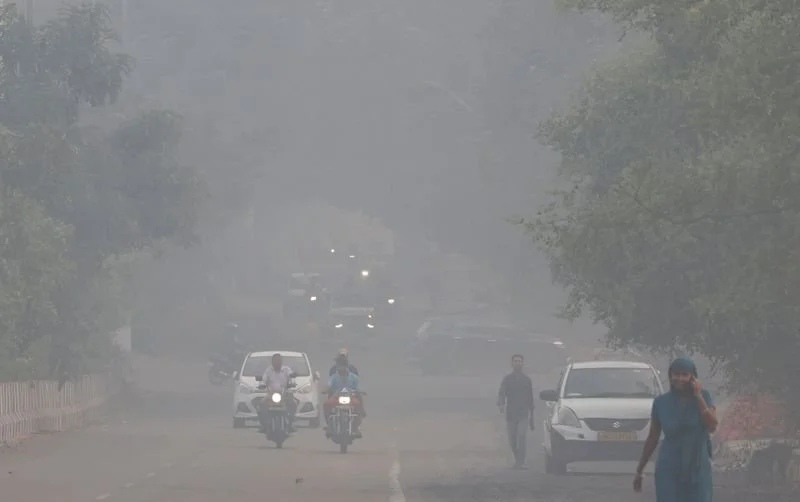
Delhi’s air turns toxic as CPCB, IQAir differ on AQI readings
Delhi’s air turned toxic after Diwali — while Central Pollution Control Board (CPCB) recorded an AQI of 351, IQAir logged a much higher figure of 1,121, highlighting a major difference in monitoring results.


Role of farm fires in Delhi’s pollution still low, for now
Despite Delhi's severe "very poor" air quality, experts note the usual spike in pollution from farm fires in Punjab and Haryana has not yet happened. Its contribution has been minimal, peaking at just 2.6%, meaning the current smog is from local sources like vehicles and industry. This delay is attributed to floods disrupting the harvest and unfavourable wind patterns, pushing the expected surge in smoke to after October 28th.

Delhi: Share of stubble fires in city’s air pollution still low, for now
The contribution of stubble burning in neighbouring Punjab and Haryana has remained negligible this season – below 1% on most days, and peaking at just 2.6%

Delhi AQI today: City’s air stays ‘very poor’ three days after Diwali
Delhi AQI today: The analysis by the Decision Support System (DSS), which tracks pollution sources, showed that the mix of emissions affecting Delhi had shifted since Diwali on October 20.

The Question is... Can Delhi Ever Escape The Cycle of Toxic Air?
Delhi's air pollution is a year-round menace, not merely a winter phenomenon. The city is trapped in a perfect storm of its own traffic, industry, and construction dust, which is then catastrophically exacerbated each autumn by agricultural burning in neighbouring states. The fundamental question remains whether India's capital can ever truly escape its toxic air and reclaim a healthy environment.

What’s polluting Delhi’s air? City stays in ‘very poor’ zone for third straight day
Source apportionment data from the Decision Support System (DSS) for air quality management shows that the mix of pollution sources impacting Delhi has changed since Diwali on October 20.
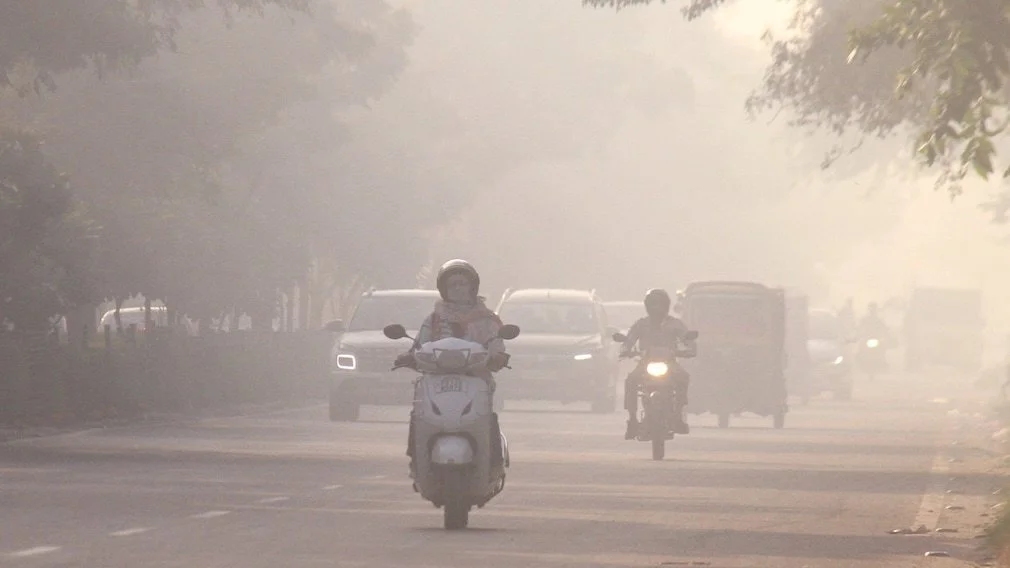
Explained: 350 vs 1,100, CPCB vs IQAir, Who Has Got Delhi's AQI Right
Both CPCB and IQAir follow different methods of calculating air quality index, resulting in different numbers.
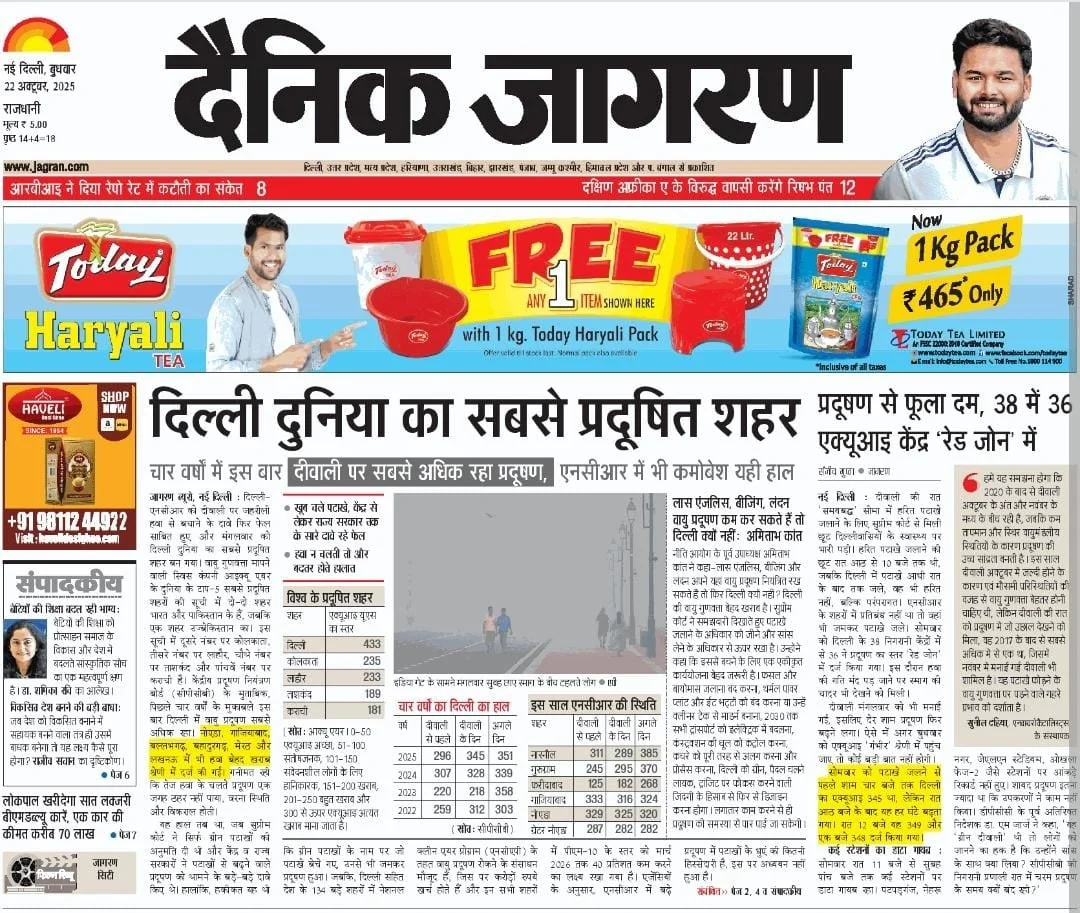
प्रदूषण से फूला दम, 38 में 36 एअरक्वालिटी केंद्र ‘रेड जोन’ में
During Diwali, Delhi’s pollution worsened significantly, with 36 out of 38 air quality monitoring centres falling into the ‘red zone’. Sunil Dahiya mentioned that the smoke from fireworks, combined with vehicle emissions and construction dust, made the air extremely unhealthy, affecting breathing for most residents.
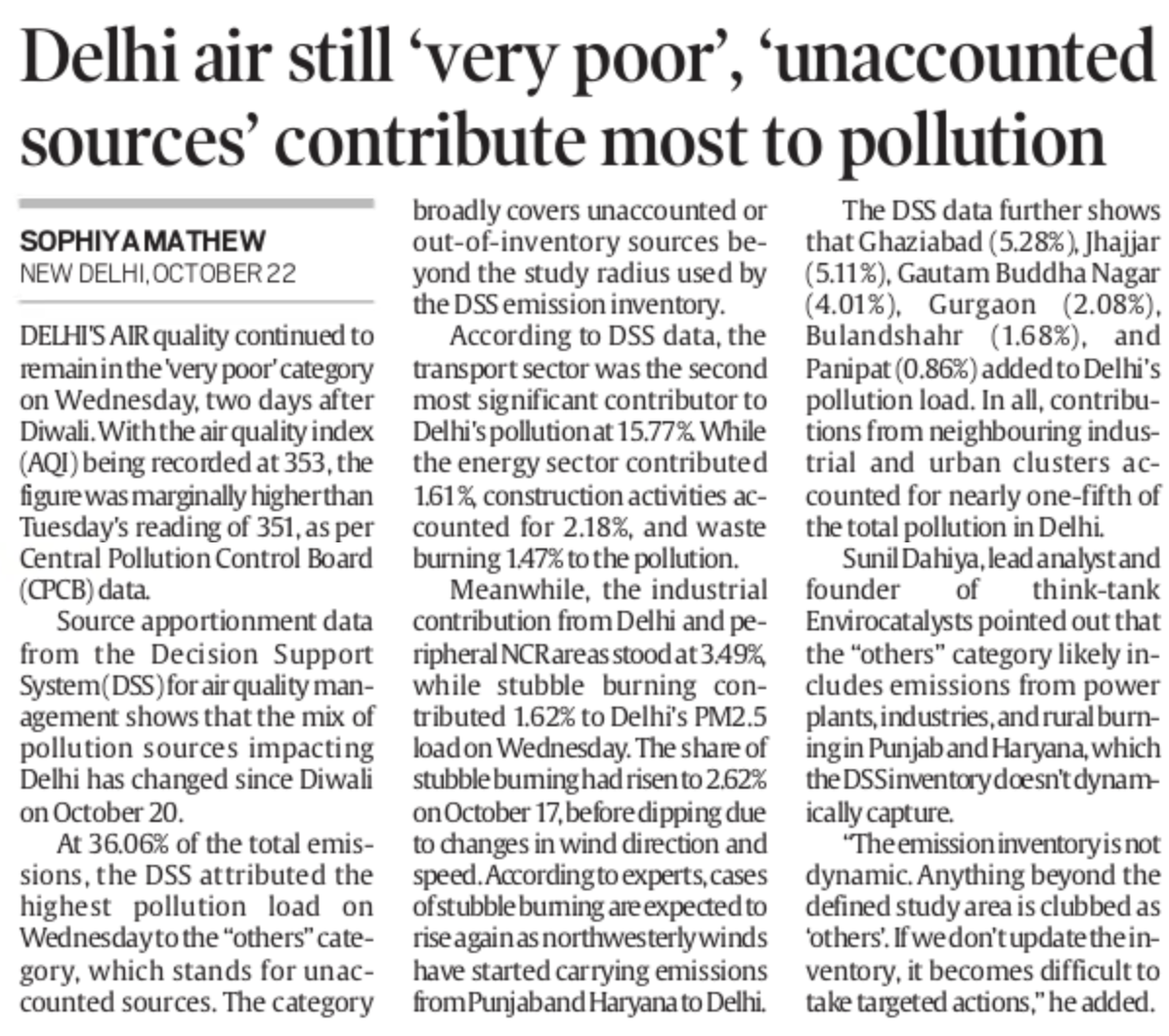
Delhi air still ‘very poor’; ‘unaccounted sources’ contribute most to pollution
Delhi’s air quality stayed in the “very poor” range two days after Diwali, with an AQI of 353. Data from the Decision Support System showed that over 36% of the pollution came from “unaccounted sources”, meaning emissions not clearly identified or tracked. Transport, industry, and waste burning also added to the problem. Sunil Dahiya from Envirocatalysts explained that these unaccounted sources likely include power plants, industries, and crop burning in nearby states, which are not properly captured in pollution records.

Crackers unleashed, toxic haze cloaks Delhi
A reading of 351 qualifies as “very poor” – a category for which NCDC recommends “avoiding physical activity outdoors” and remaining indoors as far as possible

Diwali pollution data 'gap': 30 of 39 AQI monitors went offline for hours when Delhi needed them most
Stations at Jawaharlal Nehru Stadium, Nehru Nagar, Patparganj, and RK Puram each lost about eight hours of readings.

As pollution soared on Diwali night, Delhi’s air monitors fail at key moments
An analysis of CPCB and DPCC data by HT revealed that only nine stations – barely 23% of the city’s monitoring network – recorded continuous data

As pollution peaks across Delhi, many stns go blank
Several air quality monitoring stations in Delhi, including RK Puram, went offline for hours on Diwali night, leaving critical PM2.5 data missing during peak pollution hours. Experts said the data gaps skewed average readings and hindered analysis of pollution sources. Sunil Dahiya, founder of EnviroCatalysts, said missing data hampers understanding of pollution trends and called for improved data transparency and monitoring practices.

A Diwali Of Epic Proportions: Delhi Pollution This Year Was Highest Compared To Last Four Years
Several government-run open-access websites that publish real time monitoring of air quality were unavailable for several hours during peak firecracker time on Diwali day

Pollution up 8x, firecrackers account for 40% of it
Firecracker emissions contributed between 30% and 40% to Delhi’s pollution on Diwali, with PM2.5 levels spiking eightfold due to stagnant wind conditions. Experts said calm weather and poor dispersion worsened air quality overnight, pushing pollution levels 60–67 times above WHO’s safe limit. Data analysis by EnviroCatalysts revealed that PM2.5 levels on Diwali night have consistently surged 200–300% compared to pre-Diwali levels since 2021.

Only 9 Delhi AQI monitors functioned during peak Diwali pollution
The report has revealed that a significant failure occurred as 30 of Delhi's 39 official air quality monitors were offline during the Diwali period, hiding the true scale of the pollution crisis from the public.